EdTech · Research
GenAI Study Buddy
GenAI Study Buddy for health science majors: a research study
01Overview
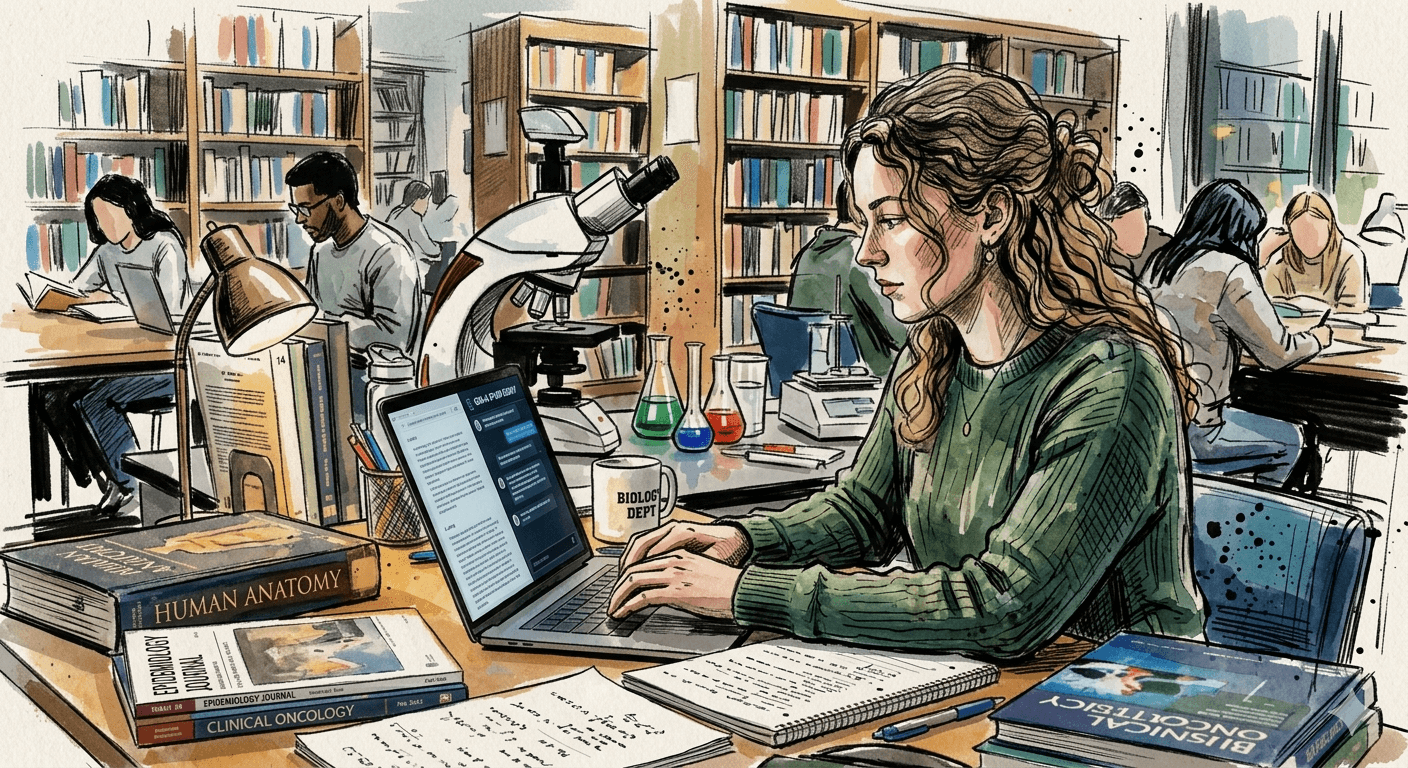
GenAI Study Buddy was a research study on how health science students use AI tools and chatbots to study, especially as AI becomes more common in education. I focused on the first part of the design process: understanding the problem and defining it clearly.
At first, I thought AI chatbots could be reliable study partners. But after interviewing students, I found a gap between that idea and how they actually use them. The research showed that AI tools work better as helpful extras than as tutors.
02Challenge
AI answers students can’t fully trust
While AI can be helpful, it often falls short in accuracy, reliability, and credibility. Its answers are usually too general and not detailed enough, making it hard for students to grasp complex topics or gain a deeper understanding.
This can cause confusion and make users doubt the content AI provides. As a result, students feel the need to double-check information themselves, which reduces their trust in AI and limits its usefulness for research and studying.
How might we design an AI study companion that provides accurate, reliable, and detailed responses, reducing the need for manual cross-verification?
03Research plan
Research planning
Goal 1
Understand how students use AI in study workflows
Goal 2
Identify pain points and trust concerns
Goal 3
Explore opportunities for structured AI-assisted learning
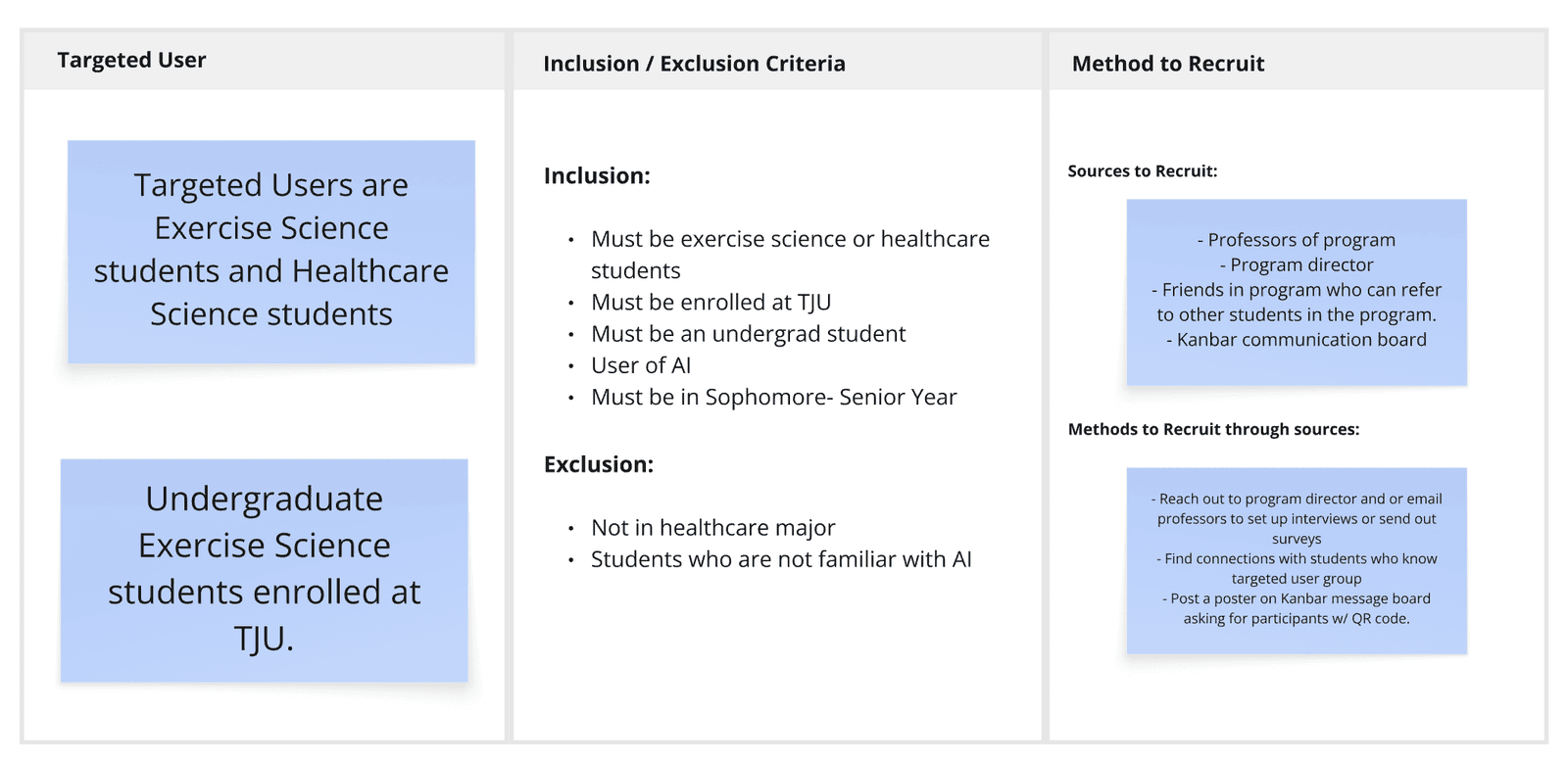
The first step was choosing the target audience: which groups would be easy to reach and willing to share how they use AI. I ran an exercise to find the groups most likely to give useful insights into AI use.
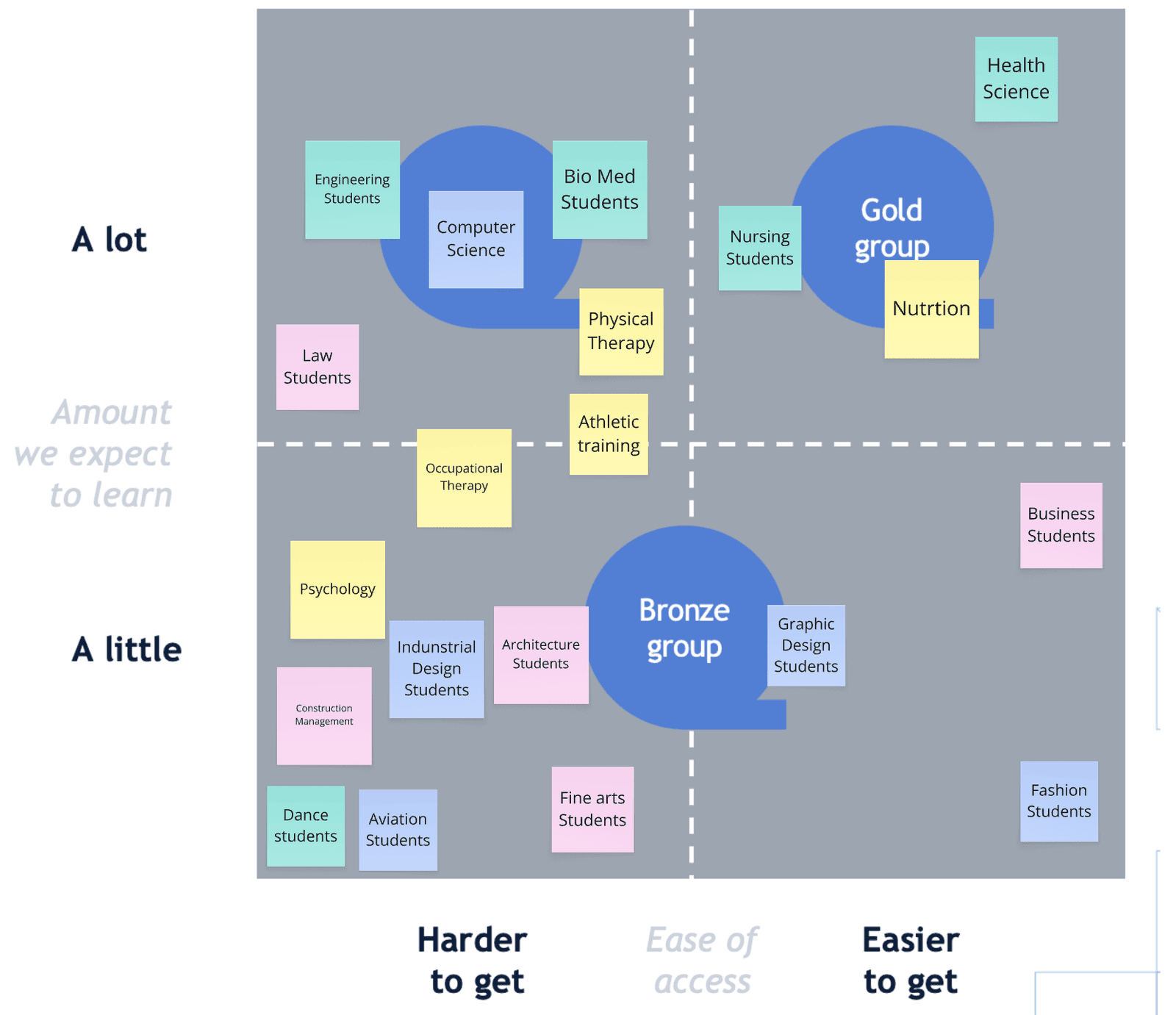
I then chose health science students at Thomas Jefferson University as the target audience and shaped the study around their needs and challenges.
To understand how health science students use generative AI in their study workflows, I combined qualitative and secondary research methods.
In-depth Interviews
Conducted 12 in-person interviews with health science students to explore their study habits, AI usage patterns, challenges, and trust concerns. These sessions provided rich insights into how students currently interact with AI tools and where they face difficulties.
Surveys
I ran a short survey to gather broader input on how often students use AI, which tools they prefer and how they see AI in academic settings. This helped validate patterns from the interviews.
Secondary Research
Reviewed existing articles, academic papers, and online resources to understand trends in AI-assisted learning, common limitations of current tools, and emerging opportunities in this space.
04Desk research
The users, the task and the environment
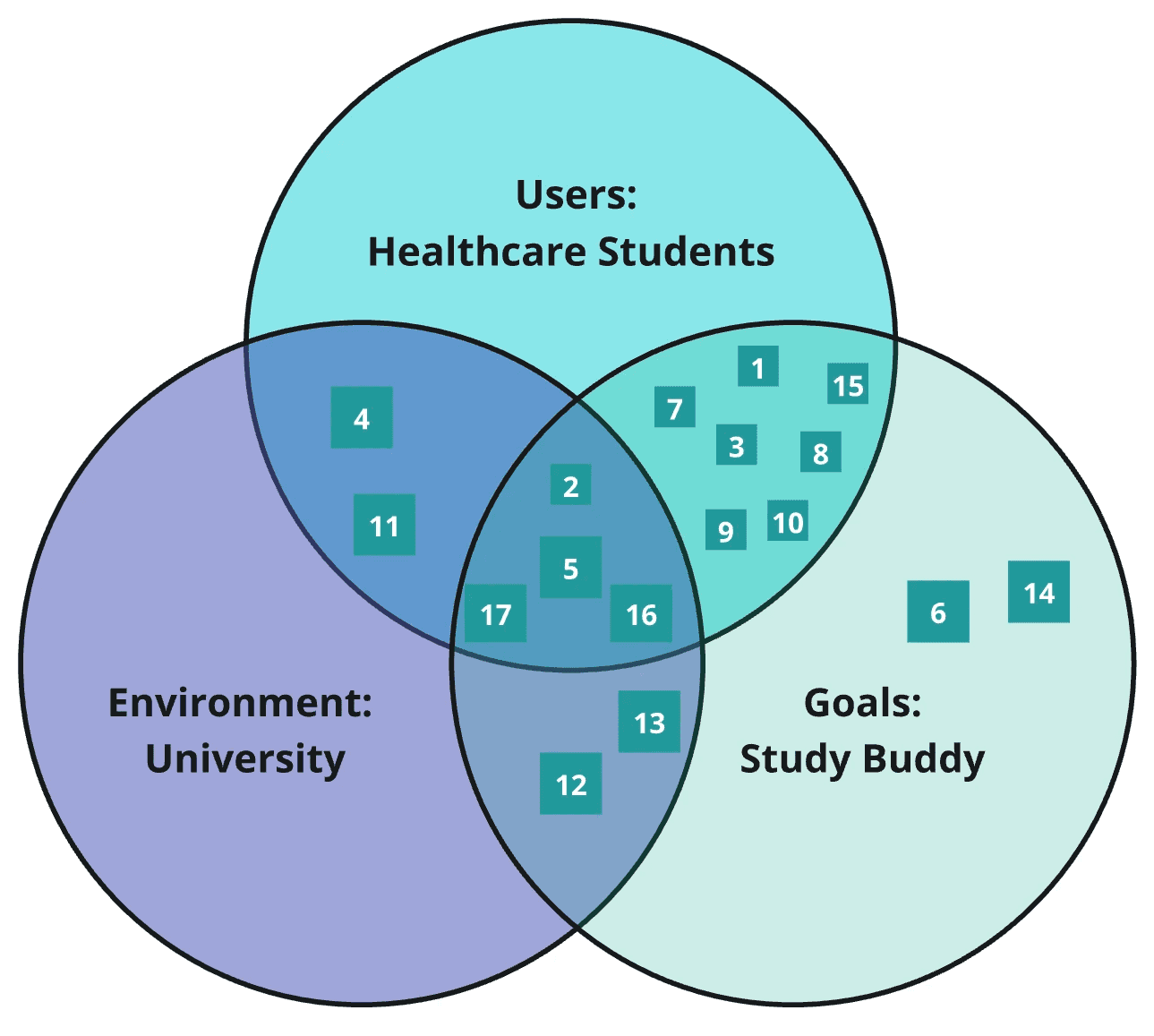
I started with a Venn diagram showing where our goals, target audience and environment overlapped, to clarify our objectives and focus the research there.
As a result, I determined that:
- The task was to conduct in-depth research on AI chatbots.
- The users of the AI chatbots would be the health science students.
- The environment was Thomas Jefferson University.
Key findings
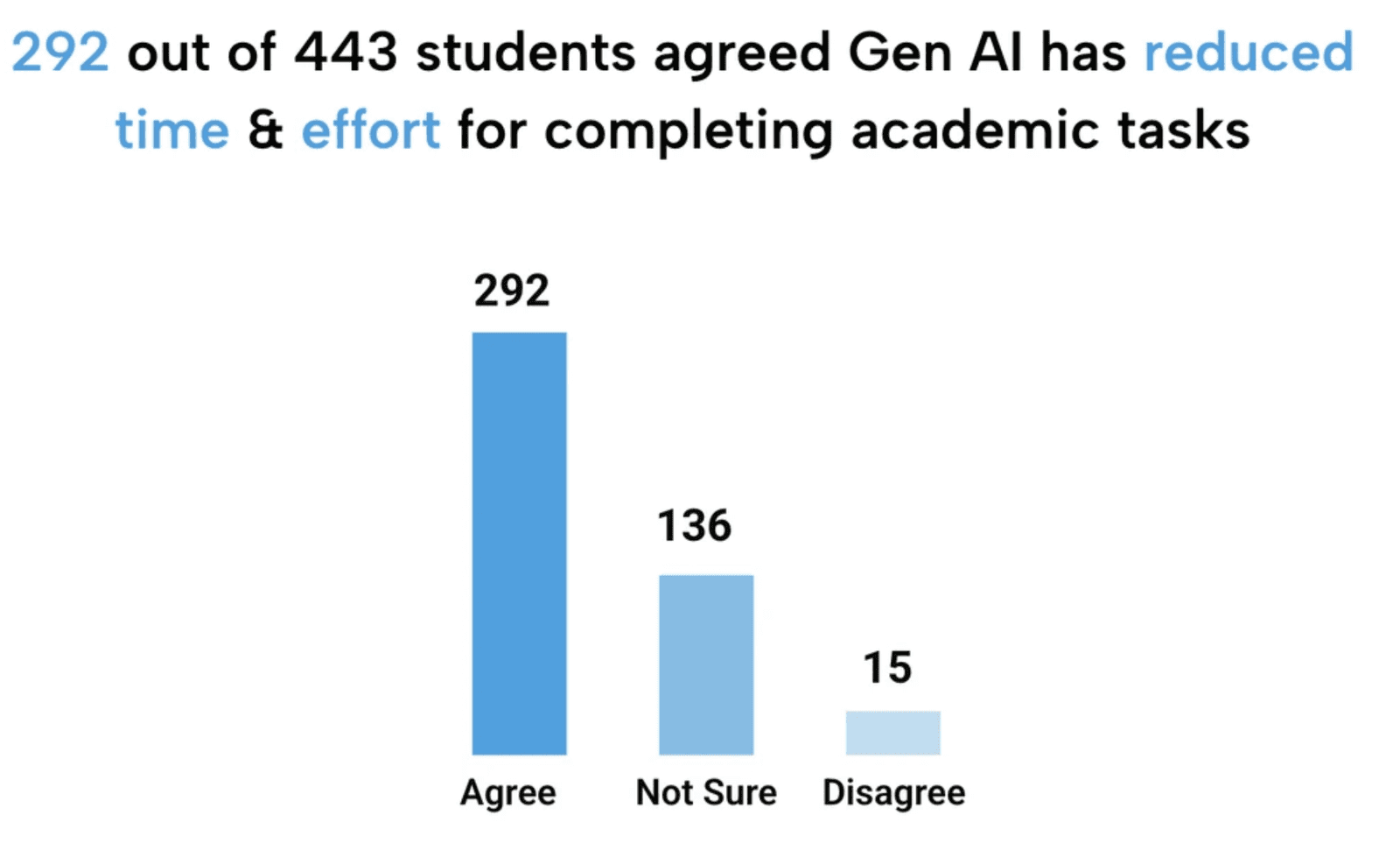
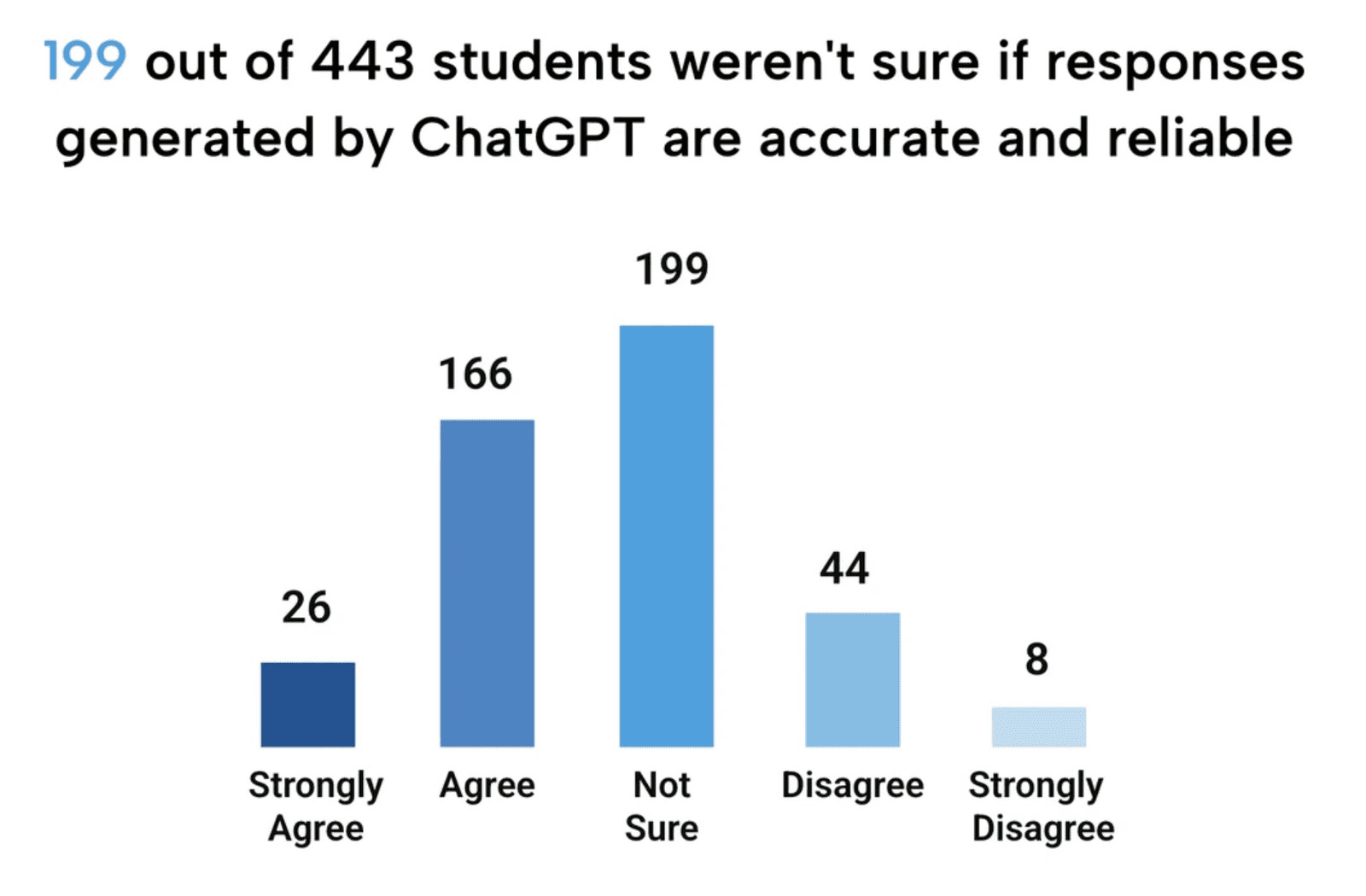
05User interviews
Talking to students
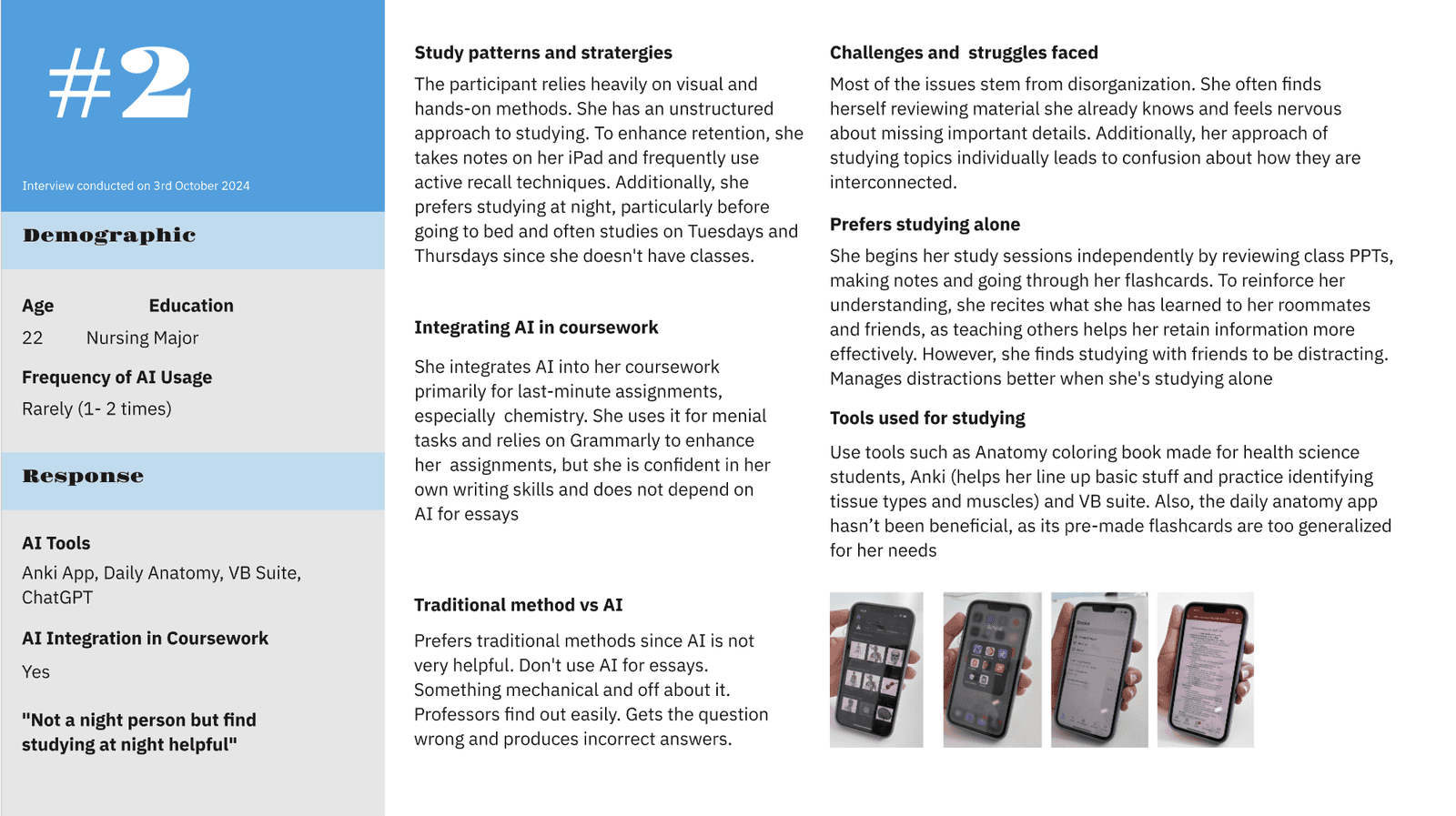
To learn whether health science students use generative AI for academic research, and what their experience has been, I interviewed 12 of them.
The goal of these interviews was to understand how health science students do research, how they see generative AI, and where it helps or falls short.
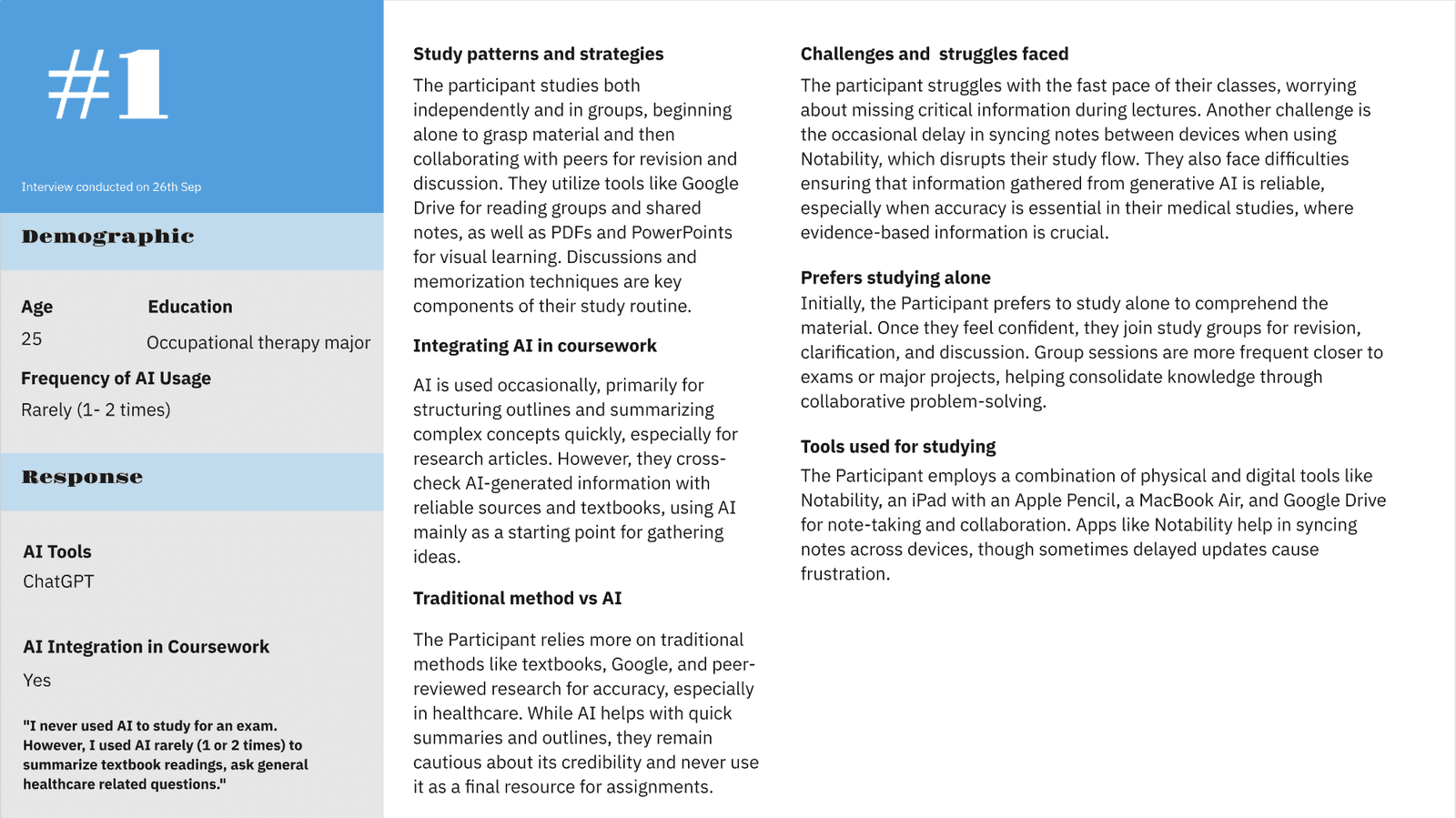
To better understand the pain points and advantages of using Gen AI, I conducted 12 interviews with pharmacy students. I debriefed each interview on its own board, covering the participant's benefits, challenges, expectations and quotes. I then synthesized these into key takeaways, needs, pain points and goals, which showed where problems and advantages overlapped across participants and pointed us toward solutions.
06Insights
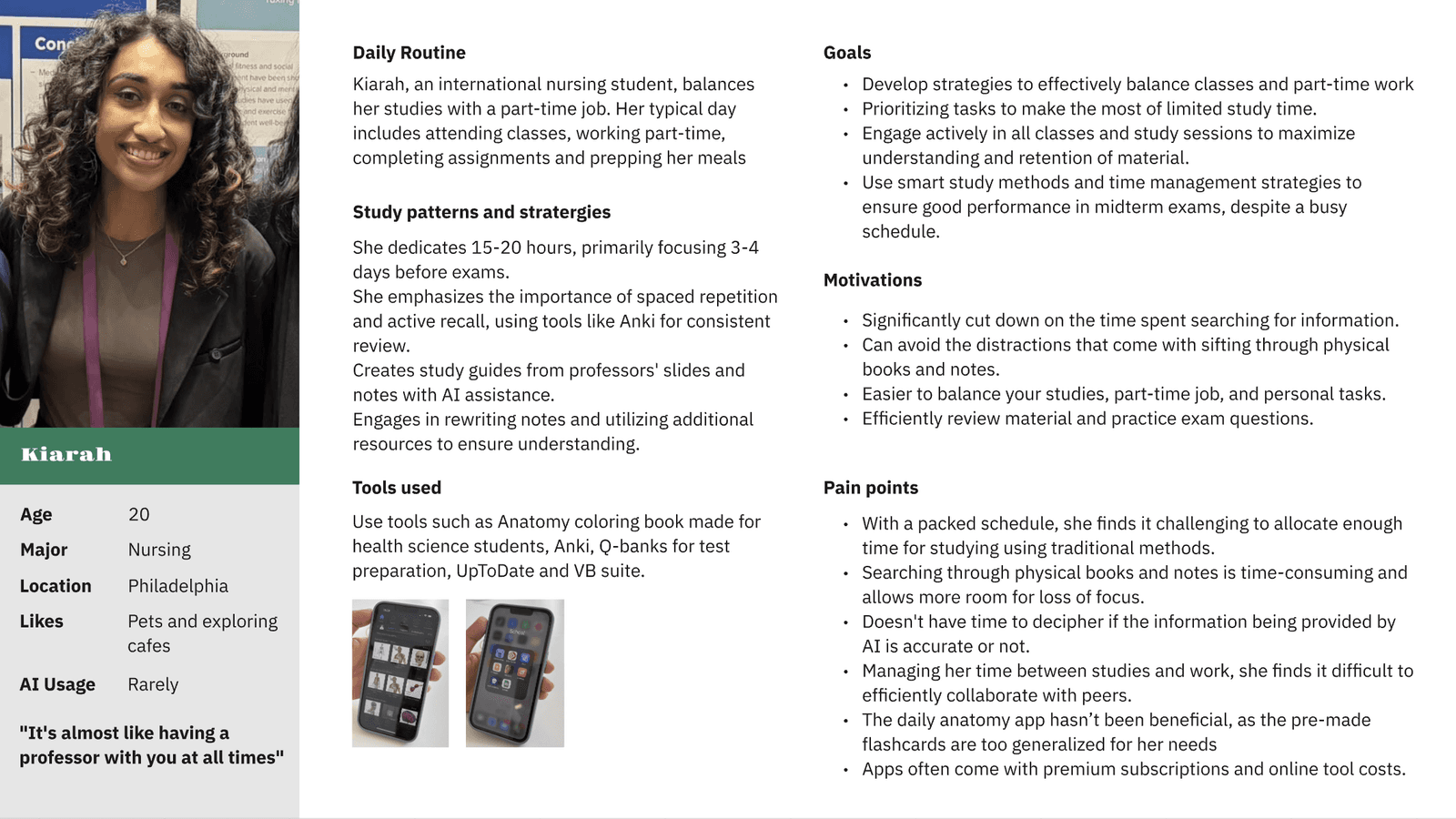
Key insights
Students rely on AI for quick answers but question its accuracy
AI outputs are often too generic or not aligned with coursework
Students lack structured workflows when using AI
There is a need for guided, reliable, and contextual AI support
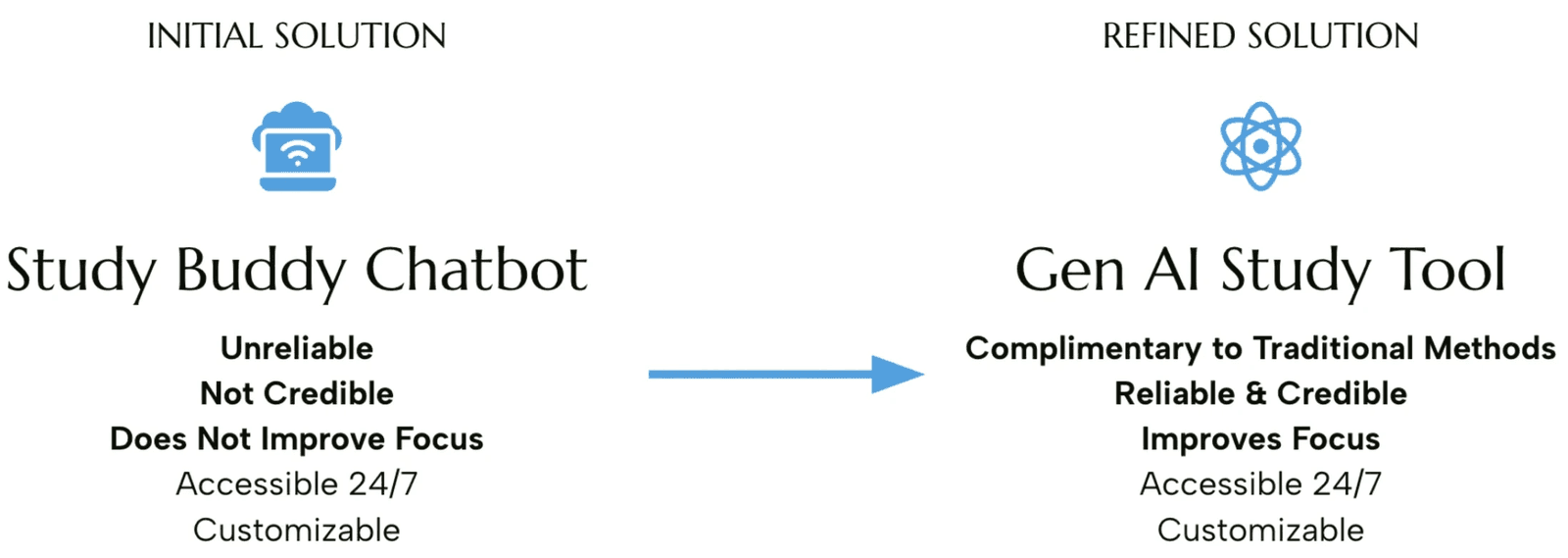
AI works best as a helpful extra tool, not as the main study buddy. It can make handling schoolwork easier, but it’s not dependable enough to replace regular study methods.
07Solution
Solutions & next steps
Through my research, I reshaped our initial concept of GenAI as a study buddy chatbot, shifting its role from an interactive companion to a supplemental tool that supports learning.
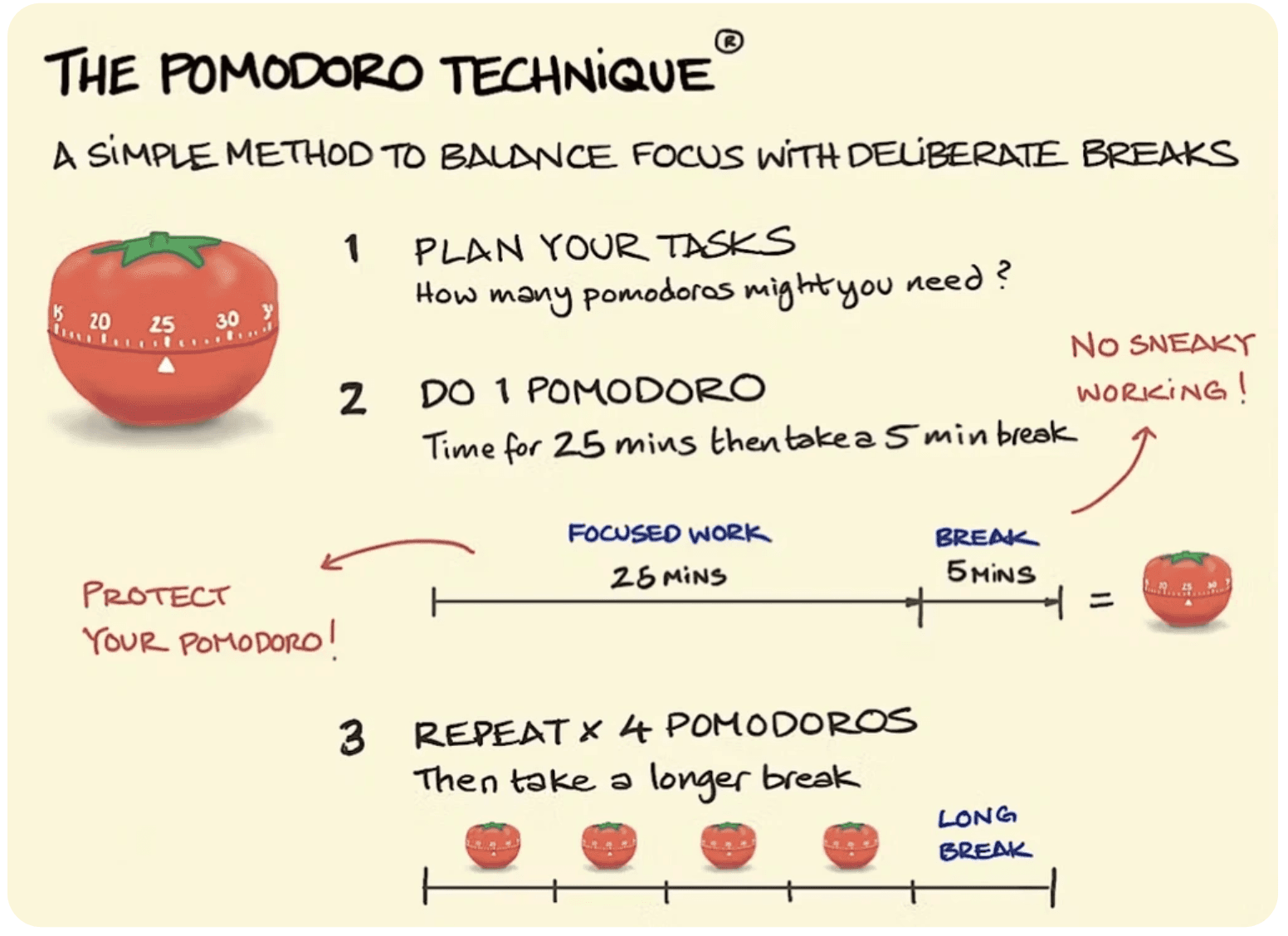
A common theme among students was managing time and staying focused while studying. To address this, I proposed integrating the Pomodoro method.
An interval-based study timer within AI tools encourages structured study habits.
08Impact
Results
- Identified gaps in AI usage, including lack of structure and reliability in study workflows.
- Revealed trust issues, with students struggling to verify and rely on AI-generated information.
- Highlighted the need for AI tools that support structured learning, not just quick answers.
- Provided clear direction for designing AI systems focused on clarity, trust, and user control.
09Learnings
What I learned
- Learned how students use AI in real study scenarios and the challenges they face.
- Understood the importance of designing AI systems that are trustworthy and explainable.
- Realized that users need guidance and structure, not just AI-generated answers.
- Strengthened skills in translating research insights into meaningful design opportunities.