
EdTech · Mobile app
Gradnest
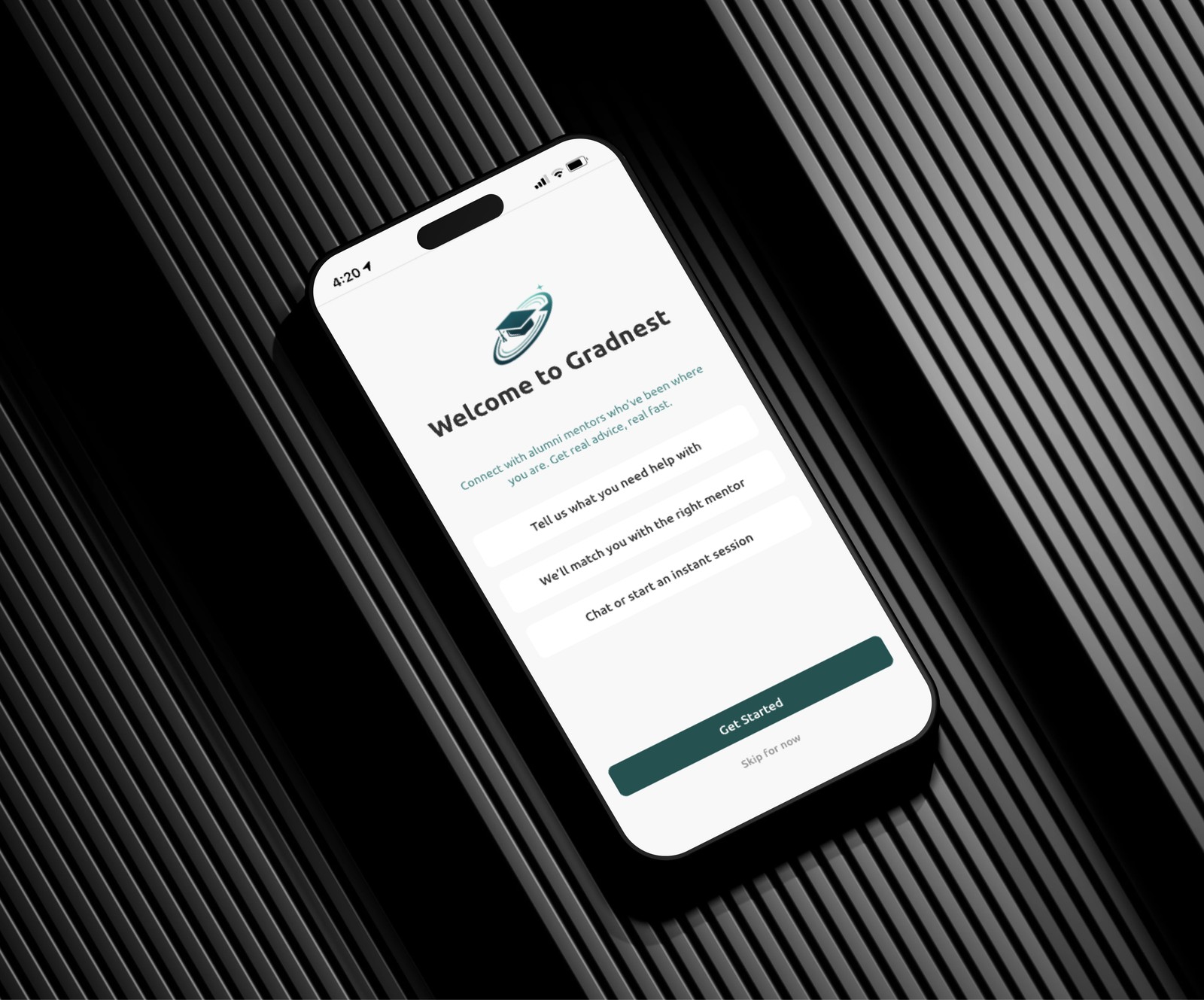
AI-supported mentorship platform connecting students with alumni
01Overview
Mentorship is important for students, but accessing the right guidance at the right time is often difficult. Most students rely on platforms like LinkedIn, where reaching out feels awkward, unstructured, and uncertain. This creates hesitation and limits their ability to get quick, relevant help.
This project explores a mobile-first mentorship platform that connects students with alumni through instant, structured, and time-bound sessions. The aim is to make mentorship more accessible, less intimidating and easier to engage with for both sides.
This was my master’s thesis project, focused on university students.
I led the project end-to-end, from research and problem framing to concept development, interaction design, usability testing, and early market validation. The work combined UX research, service design, and product thinking.
02Challenge
Designing for two kinds of users
The main challenge was designing a system that works for both students and alumni. Students need quick and reliable guidance, while alumni prefer structured, time-bound interactions and control over their availability.
Another challenge was balancing speed with quality, making mentorship instant without losing relevance or meaning in the interaction.
03Goal
Project goal
The goal was to reduce friction in mentorship through quick, low-pressure interactions between students and alumni, using instant matching, structured conversations and short, time-bound sessions. It also aimed to create a scalable system that helps students get relevant guidance while letting alumni contribute in a flexible, manageable way.
04Research
How big is the problem?
To understand the problem beyond assumptions, I began with conversations. I conducted 12 in-depth interviews with architecture students across different academic years at Thomas Jefferson University and 1 stakeholder interview with an alum.
05Insights
What students are struggling with
Alumni insight, from the stakeholder interview:
I get 10+ students reaching out every month… but I miss most messages because they come from everywhere: Slack, LinkedIn, Instagram.
Alumni Interview, 08:10
On LinkedIn, I can’t tell who is from Jefferson. Sometimes it looks like spam.
Alumni Interview, 42:18
Most students ask general questions like ‘How do I get a job?’ I want to help, but I can’t answer vague messages.
Alumni Interview, 21:05
A dedicated platform would help both sides. A place where I know who’s asking and what they need.
Alumni Interview, 55:02
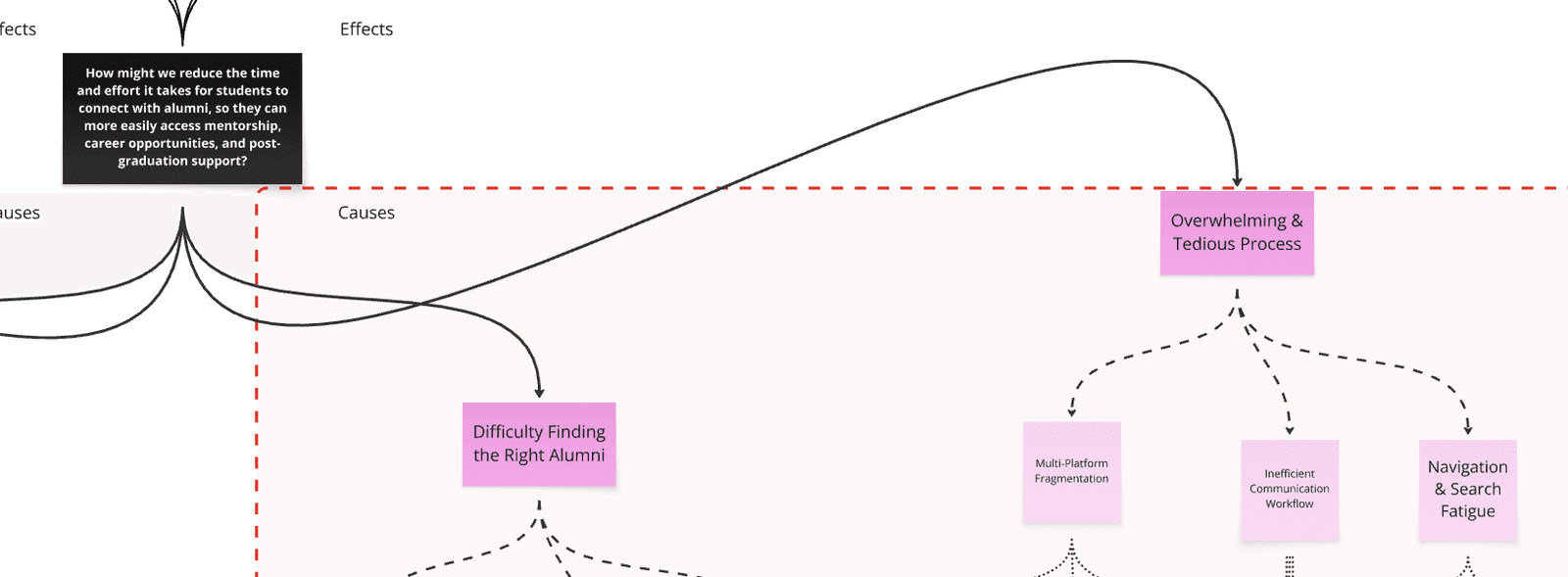
How might we reduce the tedious, overwhelming process of finding the right alumni so students can access relevant, timely mentorship without getting lost across multiple platforms?
06Idea
From exploration to idea
I began by exploring how students currently seek guidance and mentorship. Through conversations and early research, I noticed that most students relied on platforms like LinkedIn, where reaching out felt awkward and often led to no response.
At the same time, alumni expressed a willingness to help but were hesitant due to unstructured requests and time constraints. This gap revealed an opportunity to rethink mentorship as something more immediate and structured, leading to the idea of short, time-bound interactions.
07Design
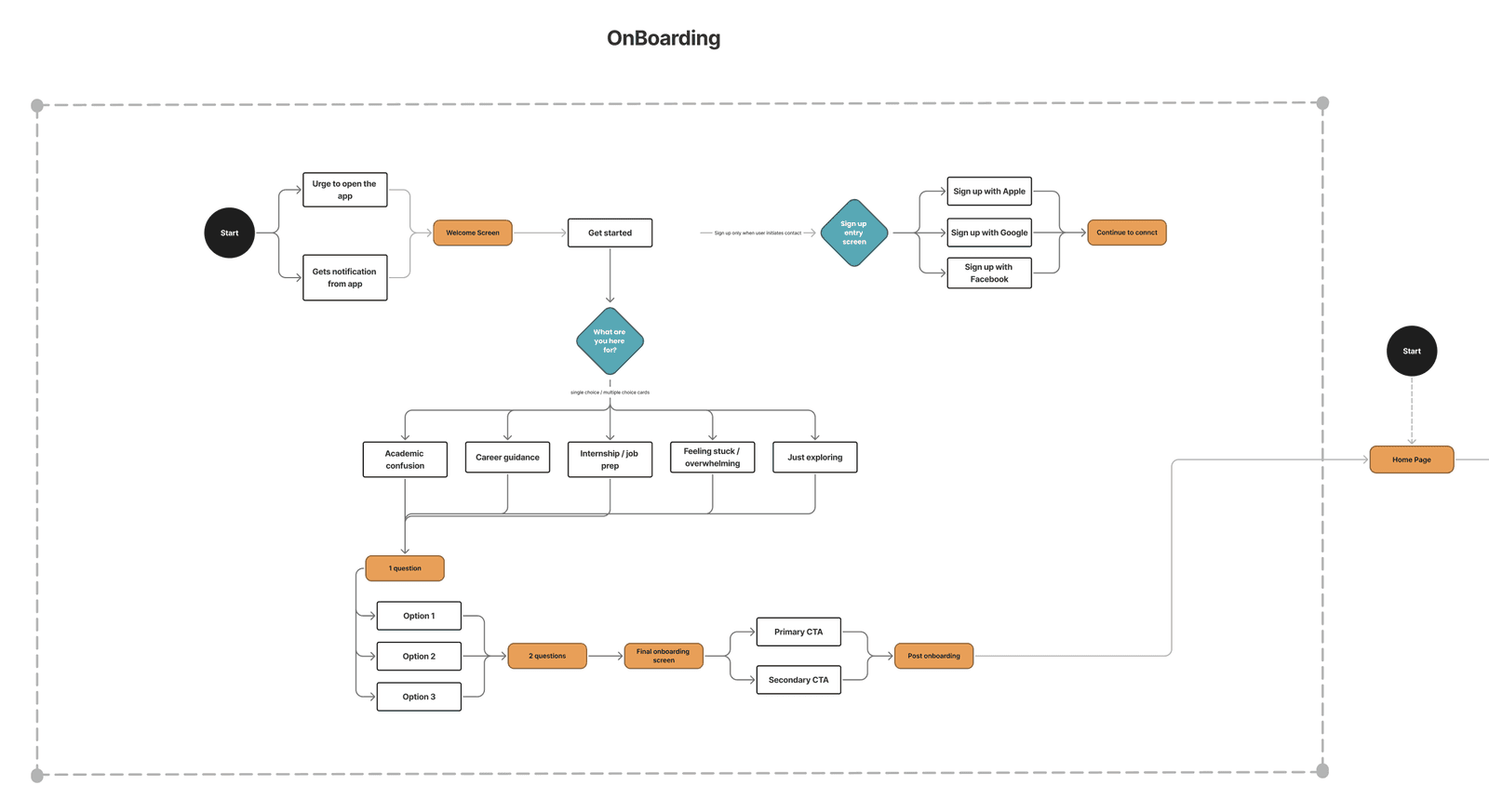
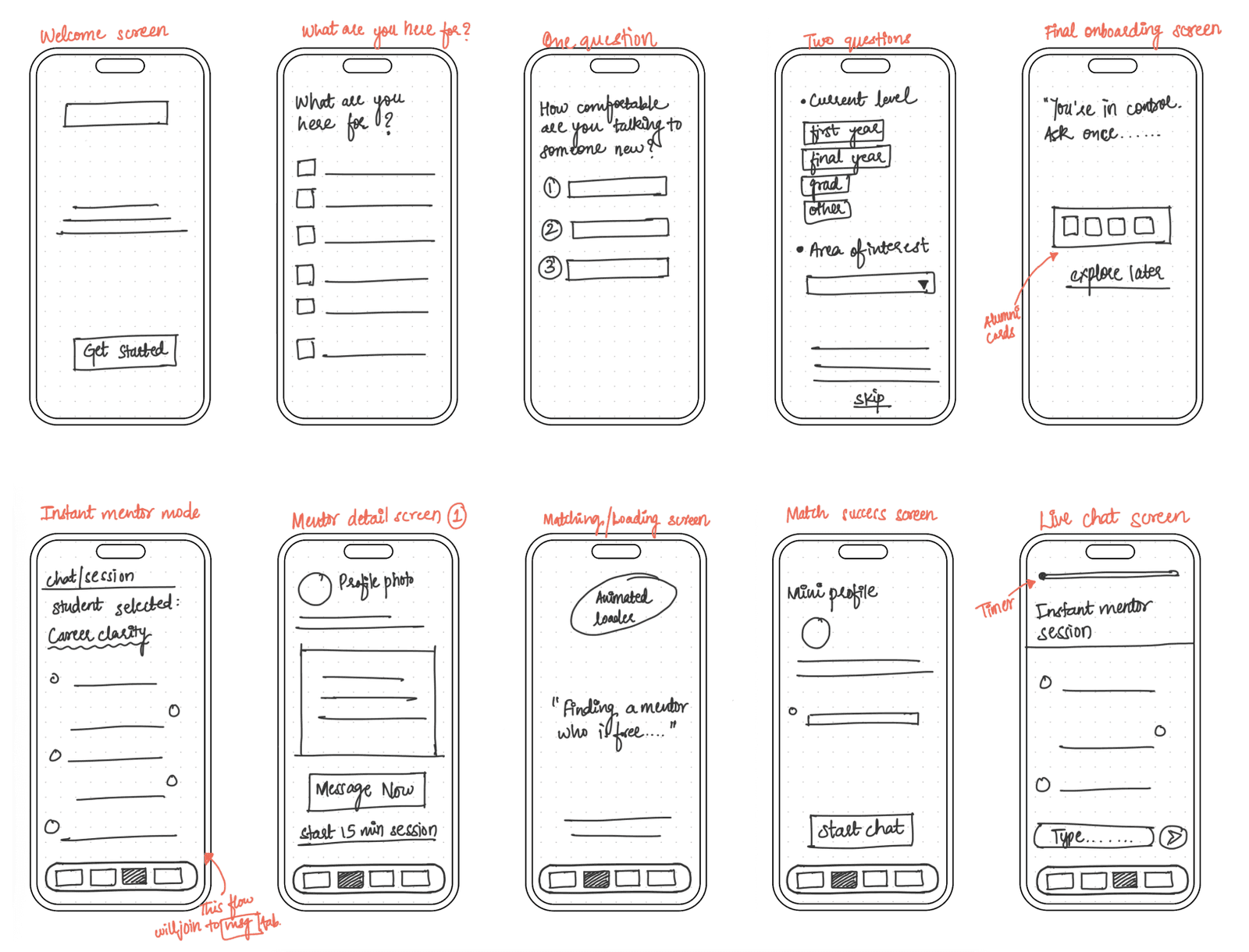
From flows to final screens
08Impact
Results
- Reduced friction in mentorship by introducing instant, time-bound sessions instead of long-term commitments.
- Helped students access quick and relevant guidance without the hesitation of cold outreach.
- Created a system that respects alumni time through structured and controlled interactions.
- Validated that short (10 to 15 min) sessions are preferred for quick help and decision-making.
- Identified that matching needs improvement, highlighting an opportunity to build trust through better personalization.
09Takeaways
What I learned
- Validation matters more than assumptions: testing ideas early changed my direction.
- Good UX is not just about screens, but about designing systems and behaviors.
- Constraints (like time limits) can improve user experience instead of restricting it.
- Designing for two-sided platforms requires balancing both user needs, not just one.
- Business thinking (pricing, growth, partnerships) is as important as design decisions.
- Setbacks (like low willingness to pay) helped me find more realistic product strategies.
10Prototype